
CHARLOTTE, NC – X-Sense highlights the growing need for whole-home protection as fire behavior in modern households becomes increasingly unpredictable.
House fires do not wait. That’s the one thing people typically don’t factor in. The firefighter’s stereotype of a fire starting small and building slowly, allowing time to escape as you work towards getting the children to safety, and get the dog and walk out the front door. That picture is largely incorrect.
Research from fire safety bodies over the years has consistently shown that in a modern home, a small fire can become a fully involved room in under three minutes. The materials in most homes today, such as foam-filled furniture, synthetic carpeting, and lightweight engineered wood, burn faster and hotter than older materials. In practice, the time between “there’s something burning” and “the room is gone” has become very obscure.
The only thing that closes that gap is an alarm that catches the problem early. Not after you smell smoke. Early.
Smoke Is Not the Only Danger
People focus on smoke because it is visible. Carbon monoxide is the one that actually kills quietly.
CO is formed whenever an object is not completely burned, such as a gas boiler or garage with a car, or a wood stove burning in a closed building or a closed garage. It doesn’t smell, look, or taste anything. Typically, it cannot be detected without equipment. Headaches, nausea, and dizziness, which are often confused with a cold or fatigue, are among the initial symptoms of exposure.
The problem with CO poisoning at night is that it does not wake people up when their CO level is rising. The gas causes increasing drowsiness. By the time someone is symptomatic enough to feel something is wrong, they may already be too disoriented to respond. This is not a rare edge case. CO poisoning in sleeping households is one of the more common causes of accidental death in homes with older or poorly maintained heating systems.
One Alarm in the Hallway Is Not a Plan
Most homes have at least one smoke alarm. Fewer have CO detection. Almost none have a properly interconnected system covering every floor and room.
One problem with putting a smoke alarm close to the kitchen or in an upstairs hall is coverage. However, a fire in the garage, basement or back bedroom will not be detected by that alarm in time for occupants to hear it while they are sleeping. Having an alarm go off whilst one threat is occurring in one room and another in another room gives you less time, not more.
Wireless interconnected systems solve this directly. When one device in the network detects smoke or carbon monoxide, every single alarm in the house goes off at the same time. It does not matter where the fire started or where you are sleeping you hear it immediately.
This technology used to require hardwiring during construction or renovation. That is no longer the case. Wireless interconnected alarms communicate via radio frequency, with no cabling and no dependence on Wi-Fi. They can be installed in an existing home in an afternoon.
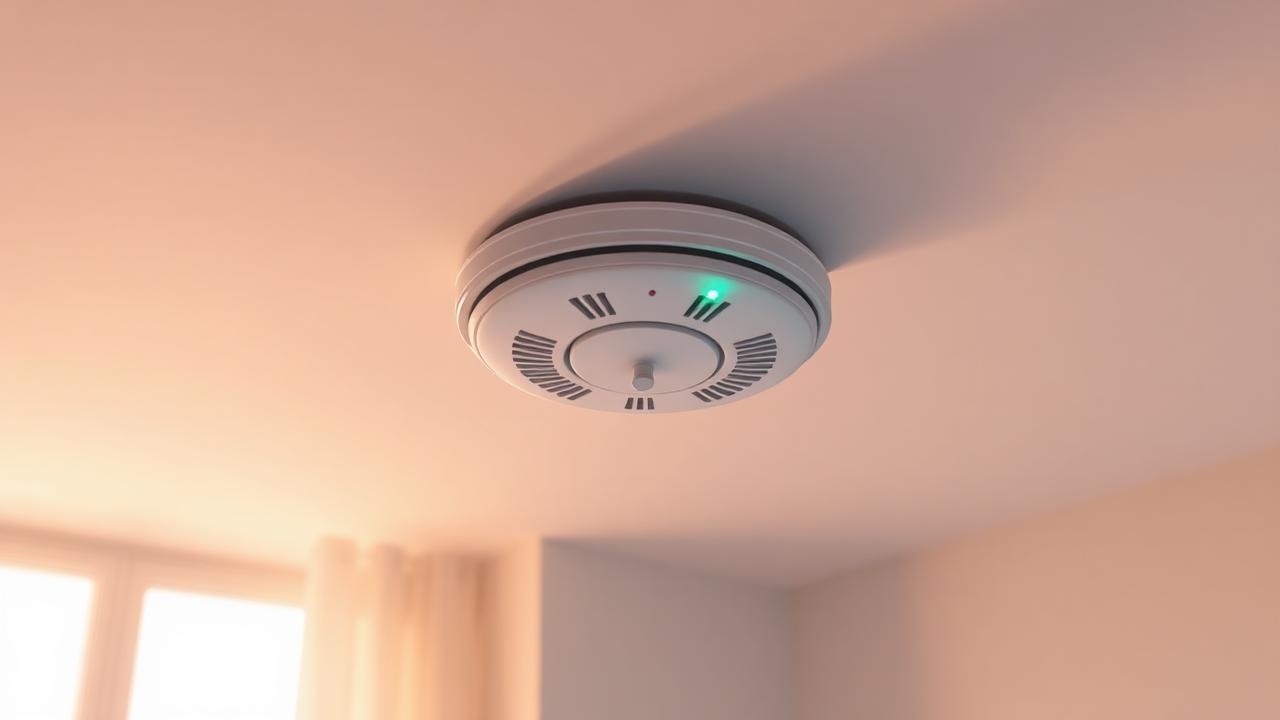
For anyone wanting dual protection in a single device, a combined smoke and carbon monoxide detector removes the need to install separate units for each threat. One device handles both, which also means fewer mounting points and fewer batteries to track over time.
A good example of this in practice is the X-SENSE SC07-W combo smoke and CO detector, which links wirelessly with up to 24 compatible units across a home. It runs on a sealed 10-year battery, triggers all connected alarms simultaneously the moment any unit picks up a hazard, and covers transmission ranges well beyond what most homes require. For larger properties, especially where coverage gaps are most likely to cause problems, a system like this makes a meaningful difference.
Where to Put Them and Why It Matters
The practical guidance is straightforward. Every sleeping area needs an alarm inside it, not just outside in the corridor. Every floor needs at least one. Install CO alarms near bedrooms where exposure in sleep is most likely to be a problem.
If your home has multiple bedrooms on the upper level and a single bedroom downstairs, then one alarm is not enough. It may be technically compliant with the minimum regulations, but it will not perform as dependably as it is supposed to when it begins to malfunction at 2 am.
The Real Reason People Do Not Act
The honest answer to why most households are underprotected is not ignorance. It is that nothing has happened yet. Smoke alarms are one of those things people mean to sort out and keep not getting to.
The cost of a proper interconnected system for a full home is less than a night out. The installation is straightforward. The 10-year battery means no annual battery anxiety and no silencing a chirping alarm at midnight. There is no real practical barrier left.
The only barrier is deciding to do it before you need it rather than after.
About X-SENSE Innovations
Founded in 2013, X-SENSE Innovations operates from its registered U.S. address at X-SENSE USA LLC, 1209 Orange St, Wilmington, DE 19801, and specializes in developing certified home fire and safety solutions for both residential and commercial environments. The company focuses on producing professional and user-friendly safety devices, including domestic fire alarms such as smoke, carbon monoxide, and heat alarms, as well as smart home safety systems covering fire protection, intrusion detection, and indoor environment monitoring.
More information is available at www.x-sense.com.
Official company social media profiles: Facebook and Instagram.
Media Detail
Contact Person Name: Farrukh
Company Name: X-Sense
Email: service@x-sense.com
Website: https://www.x-sense.com/
Phone: +1 (833) 952-1880


