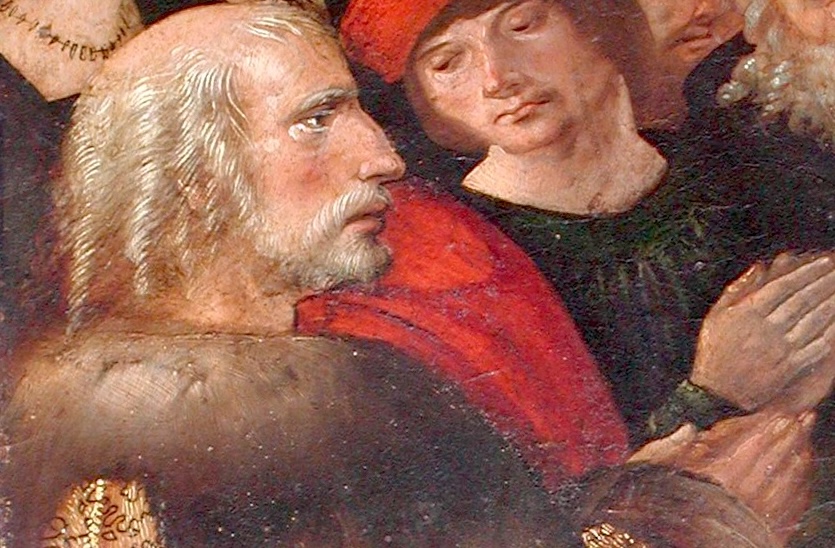
The battle over the identification of Admiral and Viceroy Don Cristóbal Colón with Christopher Columbus has now moved beyond the realm of conspiracy theories.
PATAGONIA, ARGENTINA, May 20, 2026 /EINPresswire.com/ — May 20, 1506. Five hundred and twenty years after the death of Admiral and Viceroy Don Cristóbal Colón in Valladolid, Spain, the battle over his true identity is no longer confined to obscure academic footnotes. What generations accepted as unquestionable historical fact — that the discoverer of America, Cristóbal Colón, was in fact the Genoese wool weaver Cristoforo Colombo — is now facing its greatest crisis. For centuries, textbooks, monuments, encyclopedias, museums, and governments repeated the narrative with extraordinary confidence: Cristóbal Colón was identical to the Genoese Cristoforo Colombo, the humble son of a wool weaver. Yet a growing number of researchers now argue that the certainty itself may have been the invention.
The collapse of confidence in the traditional Genoese theory accelerated after leading Columbus historian Manuel Rosa published O Mistério Colombo Revelado (Lisbon, 2006), reopening questions many historians considered settled. Through extensive archival analysis, Rosa argued that the official story rested not upon a direct documentary chain proving identity, but upon assumptions repeated so often they acquired the appearance of fact. Several forensic and DNA investigations only deepened those doubts. Even historians who do not fully embrace Rosa’s conclusions have acknowledged that the works he has published over the last two decades significantly challenge the traditional orthodoxy. Others, like João Paulo Oliveira e Costa, openly sided with him: “Doctor Rosa demonstrated in COLUMBUS versus COLÓN through a systematic analysis of all the documentation that Don Cristóbal Colón was not born in a family of Genoese weavers.”
That statement strikes at the foundation of the traditional Columbus narrative, forcing historians back to records whose evidentiary certainty appears far weaker than later generations claimed. Spanish forensic and DNA investigations expected to reinforce the Genoese narrative instead produced contradictory results. Studies between 2003 and 2006 failed to establish any connection to Genoa and suggested an age for Colón’s brother significantly older than Genoese documents indicated. For the first time in modern history, major international publications openly described the identity of Admiral Colón as disputed and unresolved. Internationally publicized DNA investigations in 2024 generated headlines suggesting Iberian, Sephardic Jewish, or noble Spanish connections rather than definitive Ligurian origins. Another DNA team claimed possible noble Sotomayor and Castro connections in 2026.
Instead of ending the controversy, modern science intensified it.
No surviving contemporary document explicitly proves that the aristocratic Iberian admiral and viceroy known as Cristóbal Colón was identical to the Genoese wool worker Cristoforo Colombo. More troubling still, documentary evidence associated with both men suggests birth chronologies separated by approximately five years. “For centuries historians merged the two identities through cumulative association, indirect references, and inherited consensus, but not through documents,” Rosa argues. Over time probability hardened into orthodoxy until generations of scholars ceased distinguishing between what the documents proved and what historians merely inferred. The Genoese Colombo found in fifteenth-century records appears connected to the wool trade and artisan life of Liguria. Admiral Colón, by contrast, emerges within the courts and maritime networks of Portugal and Castile as a polyglot navigator operating among noble houses, military orders, diplomats, and cosmographers. The royal circles surrounding his wife included some of Portugal’s highest noble families, while the future King João II himself had to approve the marriage — a political and social environment extraordinarily difficult for any commoner to penetrate in late medieval Europe.
Equally damaging to the old consensus has been the erosion of confidence in several documentary pillars long used to sustain the Genoese narrative. Chief among them stands the famous 1498 last will, historically treated as one of the strongest pieces of evidence linking Admiral Colón to Genoa. Yet late sixteenth-century Spanish tribunal proceedings declared it inauthentic — a complication rarely emphasized in popular biographies or school textbooks.
The DNA investigations may yet provide the decisive breakthrough, but researchers increasingly acknowledge that DNA alone cannot solve the mystery unless historians first identify the correct familial lineages to test. Meanwhile, defenders of the traditional orthodoxy continue to maintain that the Genoese origin remains the most probable explanation based largely on inherited tradition. Yet no comprehensive modern rebuttal has systematically dismantled Rosa’s broader evidentiary framework point by point. Now, five hundred and twenty years after the death of the navigator whose voyages transformed the Atlantic world, the certainty surrounding his origins appears more fragile than at any point since the sixteenth century.
Whether future discoveries ultimately point toward a Portuguese nobleman, a Sephardic exile, a Galician aristocrat, or another entirely different identity, one conclusion is becoming difficult to ignore: the old claim that the matter had long ago been settled by pointing to a Genoese wool worker no longer survives intact. And with every new document reexamined, every chronological inconsistency revisited, and every DNA headline published, the once unquestioned image of the “Genoese wool weaver who became Cristóbal Colón” appears less like proven history and more like an ongoing mystery — one of the most enduring historiographical constructions ever accepted as settled fact by the modern world.
Bruno Sancci
Historian and University Professor
brunosancci@gmail.com
Visit us on social media:
Instagram
Facebook
Legal Disclaimer:
EIN Presswire provides this news content “as is” without warranty of any kind. We do not accept any responsibility or liability
for the accuracy, content, images, videos, licenses, completeness, legality, or reliability of the information contained in this
article. If you have any complaints or copyright issues related to this article, kindly contact the author above.

Media gallery