
PR Newswire
CLEVELAND, Nov. 24, 2026
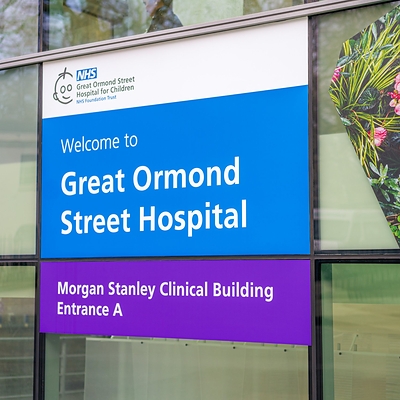
Great Ormond Street Hospital (GOSH) is collaborating with Hyland and Amazon Web Services (AWS) on a first-of-its-kind programme exploring how agentic AI could be safely developed and deployed in healthcare. The programme will establish governance frameworks and evaluate the technology’s ability to automate repetitive tasks while maintaining accuracy and human oversight.
CLEVELAND, Nov. 24, 2026 /PRNewswire/ — The 15-month ‘Agentic Hospital’ programme, supported by NHS England funding, will develop agentic AI tools and run them alongside current manual processes to assess how the technology could best support hospital teams. Tools are being built and will be tested in real-world hospital settings through a phased approach, helping the team build on existing governance processes and evaluate operational outcomes.
The programme comes as NHS organisations continue to face significant operational and financial pressures, with staff increasingly managing growing workloads and 31% of NHS staff saying they felt burnt out because of their work in the 2025 staff survey.1
The programme is using agentic AI technology to build tools which could streamline repetitive or high friction processes, reduce administrative burden and give staff more time to focus on areas where their skills and expertise add most value.
Unlike generative AI, agentic AI goes beyond generating answers or summarising information. It can coordinate tasks and take action across workflows, operating within defined rules and safeguards, with human oversight.
Pooling expertise across NHS and industry
While agentic AI is already being used in a range of sectors, and attitudes towards AI among NHS staff are broadly positive 2, there is still much to learn about how it could be applied in healthcare safely and effectively, and where it could add most value for patients, families and staff.
Working with industry gives GOSH access to specialist expertise and technology that would be difficult and costly to develop independently, helping accelerate learning while evaluating value for the public sector. GOSH selected Hyland and AWS as their technology and infrastructure collaborators for their expertise in workflow automation, agentic AI and healthcare.
Hyland is working closely with GOSH teams to design and build the agentic AI platform, and AWS is providing cloud computing credits and technical guidance.
The programme will use Hyland’s Content Innovation Cloud, built on AWS cloud, enabling agentic AI agents to securely access information needed to gather the full context of a specific task and complete it from start to finish.
The programme will use Amazon Bedrock, allowing the team to choose different AI models for different tasks, while Hyland’s AI Control Tower will provide oversight and auditing of agent activity.
The team is working closely with the Information Commissioner’s Office (ICO) and data will be managed in line with UK GDPR.
Phased approach to ensure safety
The programme will begin with administrative functions such as content management in finance. A primary focus of this phase will be building on existing governance processes to create frameworks for the rest of the programme.
Phase 1 will focus on two use cases:
- Reducing manual work in supplier reconciliation: AI agents will be evaluated on their ability to match supplier statements with invoices and flag discrepancies for staff review, helping finance teams resolve issues faster and focus on exceptions that need their expertise.
- Helping staff find and understand Trust policies: The programme will explore how AI can help staff quickly find relevant policies and understand how they apply to a specific question or task. Answers grounded in approved Trust documents could reduce time spent searching and support more consistent ways of working.
Each phase will be followed by a formal review, with progress assessed against criteria including safety, accuracy, governance requirements and the ability to reduce friction in day-to-day processes. Decisions about future phases will only be made once these assessments have been completed.
Later phases may explore clinically adjacent processes carried out after a clinician has made a clinical decision, such as booking tests or appointments. The tools themselves will not make clinical decisions.
All tools developed through the programme will operate with human oversight. Human review checkpoints will ensure tasks can be reviewed or escalated by GOSH staff based on their complexity and sensitivity.
The aim is to build evidence on how agentic AI could be deployed in the NHS safely and responsibly and which areas it could deliver the greatest benefit. The programme will run until the end of October 2027, and findings will be shared across the NHS and wider health sector. If GOSH chooses to continue using agentic AI technology, a competitive procurement process will take place.
Dr Shankar Sridharan, Chief Clinical Information Officer, GOSH and National Clinical Lead for Artificial Intelligence at NHS England said: “Agentic AI represents a fundamental shift in how hospitals could operate, improving efficiency of workflows, freeing up capacity for our staff and ultimately improving care. However, the challenge is not simply making the technology work, but ensuring it can operate safely, reliably and at scale. By bringing together NHS and industry expertise, this programme aims to establish the governance, evidence of value and standards needed to realise the full potential of agentic AI across healthcare.”
Jitesh S. Ghai, CEO, Hyland said: “This programme is not just about building more AI tools, we are creating a governed foundation that lets those tools actually be trusted with real work, across an entire institution, not just one department at a time. What we’re building with GOSH isn’t a single hospital’s AI project, but a blueprint that demonstrates how agentic AI can operate safely and transparently inside one of the most complex healthcare environments in the world – we call it the Agentic Hospital.”
Ash Thankey, Managing Director and General Manager, UK, Germany and International Organisations, Public Sector at Amazon Web Services, said: “We’re delighted to continue to support Great Ormond Street Hospital, a long-time pioneer of digital innovation, as it now explores what agentic AI can unlock for the NHS. Using secure, scalable AWS infrastructure and advanced agentic AI tools, GOSH’s teams can safely test new ways to lift the burden of routine administration to give staff more time for patients, research, and care. These cloud and AI foundations are built to scale, and what works here could go on to deliver impact right across the NHS.”
About Great Ormond Street Children’s Hospital NHS Foundation Trust
Great Ormond Street Hospital opened in 1852, the first in the UK to provide dedicated inpatient care for children. We exist to advance care for children and young people with rare and complex conditions, so that they can fulfil their full potential. With all our experts under one roof, we continually challenge ourselves to research and innovate and to find better, faster and kinder treatments and share this knowledge with our colleagues around the globe through The GOSH Learning Academy.
GOSH press officer: eleanor.sullivan@gosh.nhs.uk
About Hyland
Hyland is a leader in content intelligence and automation, empowering organizations to transform enterprise content into governed intelligence that accelerates decision-making and business performance. Trusted by thousands of organizations worldwide, including many of the Fortune 100, Hyland’s open platform uses AI to turn content, data, and processes into trusted context that enables people, applications, and agents to automate work across the content-powered agentic enterprise. For more information, visit Hyland.com.
Additional information on initial use cases:
Phase 1 will look at building tools in two use cases:
- Supplier statement reconciliation – matching invoices to statements from external suppliers and detecting anomalies. This use case is particularly important strategically because it delivers fast, measurable proof of agentic value on a well-defined, high-volume workflow. Reconciliation has clear inputs, clear outputs, and a clear way to measure success, making it an ideal first proof point for how the broader agent architecture from Hyland and AWS performs under real operational load.
- Trust policy discovery and guidance – converting Policy documents into knowledge anyone in the Trust can easily search. This use case builds the context layer necessary for future use cases within this agentic AI programme. AI Agents cannot reliably act if they don’t understand what content is authoritative, how it relates to other content, or what governs a given process, making this foundation that makes every later agent smarter and more trustworthy.
 View original content to download multimedia:https://www.prnewswire.com/news-releases/great-ormond-street-hospital-announces-first-of-its-kind-agentic-ai-programme-in-an-nhs-hospital-in-collaboration-with-hyland-and-amazon-web-services-302948750.html
SOURCE Hyland
