
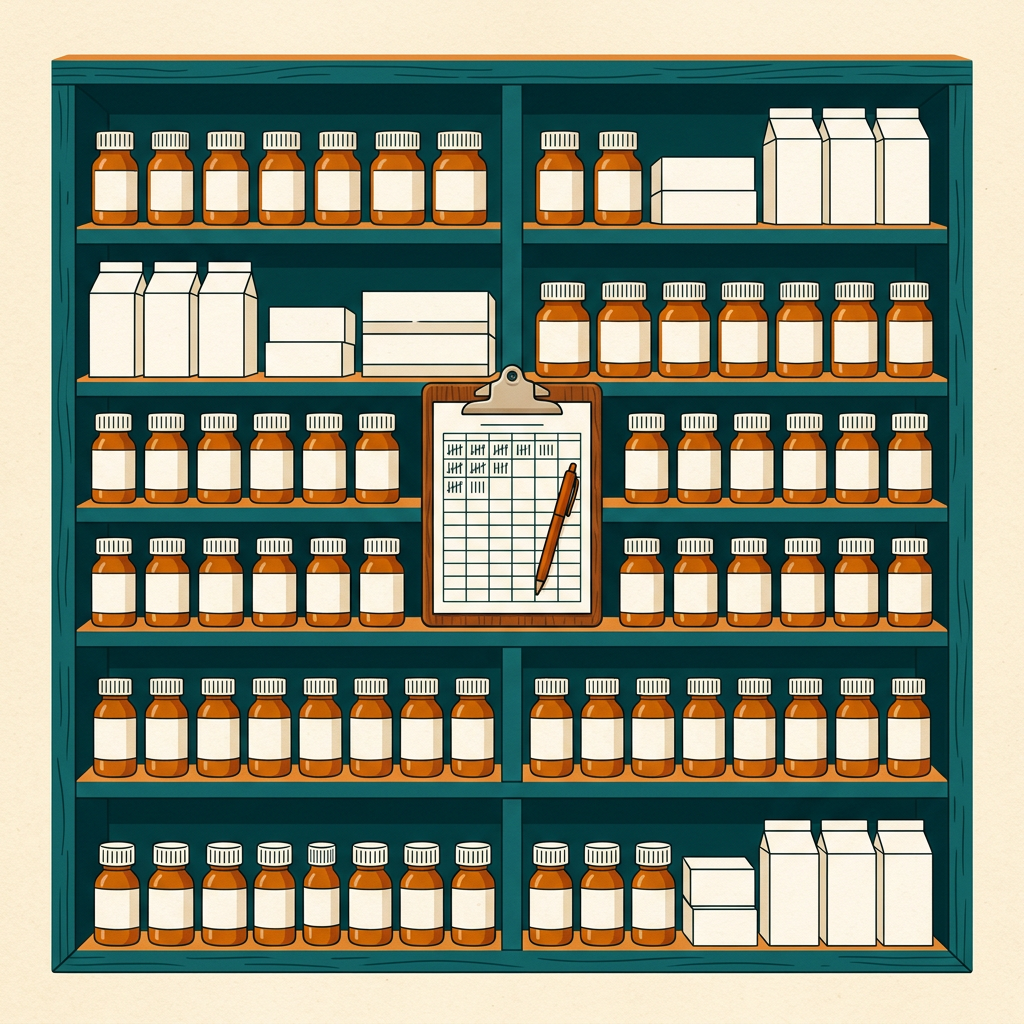
For most independent pharmacies, the shelves hold a large share of the business’s money. When stock sits unused, or counts don’t match the system, that money is tied up or lost. Good pharmacy inventory management starts with a reliable count, which is why many owners now use a written count-day plan to keep the process consistent.
Pressure on margins makes this more important. The 2025 NCPA Digest from the National Community Pharmacists Association reported a 10-year high in the cost of goods and a 10-year low in gross profits for independent pharmacies. When margins are tight, every dollar sitting on a shelf matters.
Here are practical ways to tighten up your inventory.
1. Build a Count Process Your Team Can Repeat
An accurate count is the foundation of everything else. Yet in many pharmacies, the process lives in one experienced person’s head, and everyone counts a little differently.
Inventory specialists at RxInv note that writing the process down, from preparation weeks in advance to the forms used on count day, lets any team member follow the same steps every time. A repeatable process usually includes:
- A preparation timeline that starts weeks before the count
- Clear roles, so everyone knows which sections they’re counting
- A counting script for handling partial bottles, open packages, and exceptions
- Checklists for before, during, and after the count
- Signed forms that show who counted what
Once the count is complete, keep the forms so the next one starts from an established process.
2. Use Every Count to Find Dead Stock
Dead stock is inventory that hasn’t moved in a long time. Each count is a chance to spot it. Flag items with no dispensing activity over a set period, such as six months, and review them as a group.
Then decide what to do with each item:
- Return it to your wholesaler if it’s eligible under their return policy.
- Transfer it to another pharmacy that needs it, where permitted.
- Stop reordering it automatically.
3. Catch Expired Products Early
Expired medications can’t be dispensed and often become a loss. Check expiration dates during every count, and rotate stock so the earliest-expiring products are used first. Many pharmacies send expired products to a reverse distributor, which may provide credit depending on the manufacturer’s policy.
4. Order to Demand
Overbuying is a common cause of excess inventory. Base orders on actual dispensing patterns, set minimum and maximum stock levels for regular items, and be cautious with bulk deals on slow-moving products. A discount loses its value if the stock expires on the shelf. Review your stock levels every few months, since prescribing patterns change.
5. Get Receiving Right
Many count discrepancies start at the back door. Check every delivery against the invoice, record any shortages or damaged items right away, and shelve products in their correct locations. Small receiving errors add up quickly. Where possible, assign one trained person to handle receiving each day.
6. Keep Controlled Substance Records Current
Federal rules require DEA-registered pharmacies to complete a biennial inventory of controlled substances at least every two years. Keeping records accurate between those counts makes the process smoother. Because requirements can vary, confirm the details with your own qualified advisors.
7. Track a Few Key Numbers
You don’t need complex reports to see progress. Watch your inventory turns, the value of dead stock, and the gap between counted and expected inventory. Reviewing these after each count shows if your changes are working.
The Takeaway
Strong pharmacy inventory management comes from consistent counts, regular reviews of slow-moving stock, and careful ordering and receiving. Start by making your next count a written, repeatable process, then build from there. For a structured approach, this step-by-step pharmacy inventory playbook covers planning, count-day procedures, and team forms.
RxInv
jamie@williamsautonetics.com
+1 717 629 8181
117 Rano Blvd
Suite 58
Vestal
NY
13850
United States


